Mobile App Development Services on a Managed Monthly Delivery Plan
Launch a mobile app your customers can use on iOS and Android, native or cross-platform with React Native or Flutter. Through the Delivery Plan, you get one team, one predictable monthly price and one prioritised backlog. Add web, backend, AI, data, QA or DevOps work to the same backlog whenever you need it.
Track every mobile app build on the Scrums.com Platform
Goals break down into tasks. Milestones are agreed before work begins. You track every build from requirement to the App Store, and the next task starts the moment one ships.
Scrums.com Platform / delivery board
Requirement9
APP-413est 48hrs
Google Pay in checkout
Mobile5 pts
API-208est 40hrs
Order status API for push alerts
Backend5 pts
AI-031est 56hrs
Support-ticket triage agent
AI8 pts
DSN-077est 24hrs
Onboarding flow redesign
Design3 pts
Delivering1
APP-412day 3/6
Apple Pay in checkoutMobile
✓Implementation
Unit and UI tests
Code review approved
Build on TestFlight / internal track
iOS · AndroidPR #1820
Gate
Live38
APP-411✓ live
Staged rollout on Google Play
Mobile · just now
QA-154✓ live
Device-matrix regression suite
QA · 4d ago
DAT-062✓ live
Revenue dashboard from app events
Data · 6d ago
WEB-310✓ live
Pricing page rebuild
Web · 8d ago
Illustrative demo with sample data. On the Scrums.com Platform, the board shows your own goals, tasks and releases.
How the mobile app development process works
01Queue your app workPick mobile scopes or describe your own.
02SubscribeCheck out and onboarding starts immediately.
03First code in production in 48 hoursAccess to your repos, store accounts and CI.
04Ship, review, repeatTrack every build on the Scrums.com Platform.
Scope and capacity
What one workstream delivers, for mobile or any software
Your backlog can hold any number of requests, but the team delivers them one workstream at a time. A workstream is one managed team working on your highest-priority request until it is live, then starting the next. More requests mean more months, not faster delivery. Work is scoped and delivered within your plan’s capacity. Priorities can change; additional parallel workstreams require more capacity. The same plan covers web, backend, AI, data, QA and DevOps work, so all of it can share one backlog.
One backlog · iOS + Android · 1 workstreamDelivering
iOSSwift
Cross-platformReact Native · Flutter
AndroidKotlin
Active at once
One request
Typical MVP
3 to 4 months
Delivery
Two-week sprints
Code owned by
You
Example: a React Native MVP on one workstream
Illustrative
Month 1Discovery and design, sign-in and account flows, CI/CD and store accounts set up.
Month 2Core features: catalogue, search, order history and the backend APIs behind them.
Month 3Payments, push notifications, device-matrix QA and analytics.
Month 4Store submission, staged rollout and the first round of fixes from real users.
A sample customer app for iOS and Android from one codebase. It matches the 3 to 4 months a well-scoped MVP typically takes. Onboarding starts immediately after checkout, and your delivery owner scopes your own plan with you.
What affects the number of months
→Feature count and depthThe number of screens, user roles and edge cases in scope.
→IntegrationsPayments, identity, maps, legacy systems and third-party APIs.
→PlatformsNative iOS and Android builds take longer than one cross-platform codebase.
→DesignCustom interfaces and motion take longer than standard platform components.
→Starting pointA new build, an existing app, or a takeover that needs an audit first.
→Review and approvalsHow quickly your team signs off builds, and App Store and Google Play review.
Native and cross-platform app development for iOS and Android. One workstream.
iOS app development services
Swift · SwiftUI
Native iOS apps built with Swift and SwiftUI. Your team gets the full iOS feature set: widgets, live activities, Face ID, Apple Pay and the latest platform APIs, designed to Apple's Human Interface Guidelines.
When it fitsYour target market is the US or Western Europe, revenue per user is a priority, or the product depends on Apple-only features such as widgets, live activities or Apple Pay.
Trade-offsA native iOS app is a separate codebase from Android, so reaching both stores natively means two builds to develop and maintain.
How the plan covers it
✓Native Swift development for performance, safety and speed
✓Custom UI/UX across iPhone, iPad and Apple Watch
✓API and backend integration: payments, auth, push, analytics
Native Android apps built with Kotlin and Jetpack Compose, across phones, tablets, foldables, Android TV and Wear OS, with full access to Google Play services and Firebase.
When it fitsYou need global reach or emerging markets, a wide range of devices, or deep use of Google Play services and Firebase.
Trade-offsThe device range is wide, so testing across screen sizes and OS versions takes more QA effort. Native Android is also a separate codebase from iOS.
One React Native codebase for iOS and Android. A strong fit for teams with web and React experience, with most code shared across both platforms and one app to maintain.
When it fitsYou want to launch on both stores at once, your team already works in React or TypeScript, or speed to market matters more than platform-specific polish.
Trade-offsSome platform features need native modules written in Swift or Kotlin, and graphics-heavy apps can perform better fully native.
How the plan covers it
✓One codebase, live on the App Store and Google Play
✓Platform-specific patterns where they matter: HIG on iOS, Material on Android
✓Native modules built when a feature needs them
✓Updates and fixes ship to both platforms from one codebase
Keep a live app healthy after launch. The same plan covers crash monitoring and bug fixes, OS compatibility updates, security patches and release pipelines, for apps we built or apps you bring to us.
When it fitsYour app is already live, you are taking over an app from another team, or new iOS and Android releases keep breaking things.
Trade-offsMaintenance shares your workstream with new features. You set the split, so heavy maintenance months leave less room for new work.
How the plan covers it
✓Crash reports monitored, issues reproduced and fixed
✓Beta OS releases tested and deprecated APIs updated
✓Dependencies, SDKs and security advisories kept current
✓Existing app takeover with a codebase audit first
Design, development, testing and release. Managed together.
Every Delivery Plan · Core comes with the full mobile team and the tooling around it: product design, iOS and Android engineering, QA and release work, run by one delivery owner.
Delivery managementOne accountable delivery owner.Milestones agreed before work begins.
01Product and UI/UX designCustom UI across iPhone, iPad and Android, to Apple HIG and Material Design
02Native iOS engineeringSwift and SwiftUI: widgets, Face ID, Apple Pay, the latest platform APIs
03Native Android engineeringKotlin and Jetpack Compose, optimised across thousands of device configurations
04Cross-platform engineeringReact Native or Flutter: one codebase, live on both stores
05QA and testingQA agents and code-review agents run on the platform with the human team
06DevOps and release pipelinesApp signing, store metadata, compliance checks and staged rollouts
07App Store and Google Play submissionHandled end to end, 98%+ first-time App Store approval
08Maintenance after launchBug fixes, OS compatibility updates, security patches and monitoring
10Code and IP ownershipAll code, designs and assets are yours from day one.
100%
Launch is not the finish line.
Bug fixesCrash reports monitored, issues reproduced and fixed. Critical fixes typically inside 48 hours.
OS compatibility updatesBeta releases tested and deprecated APIs updated when Apple and Google ship new versions.
Monitoring and release pipelinesCrash detection, performance tracking and staged rollouts as a repeatable process.
Runs on the Scrums.com platform
Every Delivery Plan runs on the Enterprise AI Platform for software engineering.
Your team, its AI agents and your delivery data sit on one governed platform. That is what powers your delivery board, the QA and code-review agents, and the talent bench behind your plan.
One mobile hire covers one role. The plan covers the whole team.
A mobile app needs design, iOS, Android, QA and release work. Hiring covers them one role at a time. The Delivery Plan covers them in one monthly price.
Swipe to compare →
Compare
RecommendedScrums.com Delivery Plan · Core
In-house mobile developer
Traditional agency
Roles covered
✓Design, iOS, Android, cross-platform, QA, DevOps
One role per hire
Depends on the agency bench
Time to start
✓48 hours to first code in production
Recruiting comes first
Proposal and contract cycle first
How you pay
✓Was $8,000£6,700R140,000now $4,500£3,750R79,000 / month, one plan price
Basis: the figure that the current Scrums.com mobile app page states for delivery cost against US and UK firms. It is not a quote for your scope.
What you get
Why companies choose a managed mobile app development team
01
No hiring
Skip recruiting and ramp-up. Scrums.com starts from a permanent bench, and your first code is in production in 48 hours.
02
One monthly price
One plan price for design, engineering and QA. Your scope sets the number of months.
03
Every mobile skill
Swift, Kotlin, React Native, Flutter, mobile security and App Store optimisation on one bench.
04
Low management load
One accountable delivery owner runs the work. You set the priorities and review working builds.
05
Release-ready by default
QA agents, code-review agents and release monitoring run on the platform with the human team.
06
Built for regulated industries
FinTech payment apps, banking portals and insurance claims tools, built for compliance from the first sprint.
Customers
Mobile app development case studies
Teams are matched to your domain, built for FinTech, Banking and SaaS, across Swift, Kotlin, React Native and Flutter.
Featured mobile case study
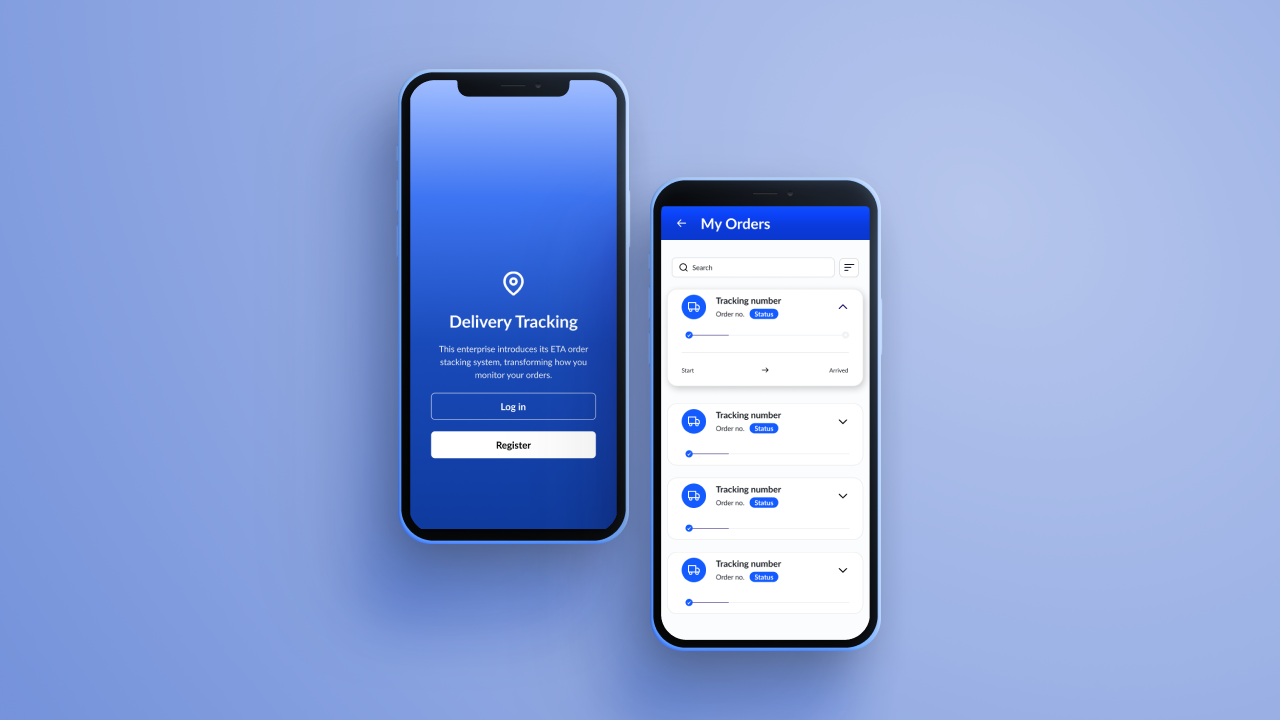
Order and delivery tracking app
Challenge
Customers could not track their orders and flooded customer service with status calls. The service team had no view of driver locations or order statuses.
Platforms and technologies
React Native and Expo mobile app, a Vite-React and Chakra UI admin portal, AWS Lambda, AWS Cognito and AWS hosting, integrated with SAP.
Work delivered
Real-time order tracking with ETA notifications, driver geolocation with Google, multi-factor log-in with ID and OTP checks, and a central admin portal.
Result
Self-service order tracking cut inbound status calls. Management got real-time visibility of orders and drivers, and new features shipped every two weeks.
One Delivery Plan · Core covers your development priorities across services. Start with mobile, then queue backend, AI, web or data scopes on the same backlog, or describe your own.
Add one clearly bounded production feature set to an existing mobile application. Ends released to the stores without destabilizing what already works.
A fixed-scope sprint that takes one mobile app from build-ready to live on the App Store and Google Play. Native Swift/Kotlin or cross-platform React Native/Flutter, with store submission handled end to end.
Build and ship a native Android application for a defined product scope using Android-native technologies. Ends live on Google Play, fully owned by you.
Build and ship a native iPhone/iPad application for a defined product scope using Apple-native technologies. Ends live on the App Store, fully owned by you.
Build a mobile app that remains useful without connectivity and safely syncs state when the network returns. Ends field-tested against real network conditions.
Build one React Native codebase targeting iOS and Android for a defined production application. Ends with both apps live from a single codebase you own.
Convert an existing browser workflow into a store-distributed mobile experience with mobile-native behavior. Ends with your product in both app stores.
Core costs Was $8,000£6,700R140,000now $4,500£3,750R79,000/month for one active workstream. Your app’s scope determines the delivery schedule and total cost. You can use the same subscription for other development priorities.
Best for companies building a new app, adding features to an existing app, or taking over a stalled project.
Delivery Plan · Core
One plan for your software backlog.
Now $4,500£3,750R79,000/ monthWas $8,000£6,700R140,000
✓Delivery owner. One accountable owner runs your engineers, designers and testers.
✓One backlog across your development priorities. You set the order; requests are scoped and delivered one workstream at a time.
✓Visibility. Milestones agreed up front. Requests, releases and results live on the Scrums.com Platform.
✓Ownership. Code, designs and data are yours from day one, with handover included.
Work is scoped and delivered within your plan’s capacity. Priorities can change; additional parallel workstreams require more capacity.
First-month benefits
14DAYS
First-delivery guaranteeYour first agreed deliverable ships within 14 days of scope and access being confirmed, or your first month is free.
$500 in AI infrastructure catalog creditsMONTH 1
Annual-plan benefits$10,000 in specialist services
Technical Assessment & Delivery RoadmapWe review your systems, rank your priorities and agree the first deliverable.
CI/CD & Quality Pipeline SetupYour pipelines, environments and quality checks, set up and handed over to you.
You buy monthly delivery capacity, not a fixed project price. Infrastructure usage and third-party services are billed separately. Full Delivery Plan coverage and terms →
Day 0Scope and access confirmedOnboarding starts at checkout. You confirm scope and share repos, store consoles and CI.
Within 48 hoursFirst code in productionFirst change merged and deployed through your pipeline.
Within 14 daysFirst agreed deliverable shipsFor example a feature build on TestFlight or the Play internal track.
If it does not shipYour first month is freeYou do not pay for month one.
The first deliverable is agreed in writing before the clock starts. The clock starts when scope and access are confirmed. Applies to the first deliverable on a new plan.Read the full Delivery Plan terms →
FAQ
Mobile app development questions, answered
Still deciding? Talk to sales and get a scoped answer for your app.
Delivery Plan · Core costs Was $8,000£6,700R140,000now $4,500£3,750R79,000 a month, excluding VAT or sales tax. That buys one active workstream with a managed mobile team. It is monthly delivery capacity, not a fixed price for a complete app, so your scope sets the number of months.
No. Was $8,000£6,700R140,000now $4,500£3,750R79,000 a month buys one month of delivery capacity: one active workstream with a managed team. Your app’s scope sets how many months the build takes, and so the total cost. A well-scoped MVP typically takes 3 to 4 months; a full-featured app with multiple user roles, backend integrations and custom design typically takes 6 to 9 months. Infrastructure usage and third-party services are billed separately.
Yes. Delivery Plan · Core covers web, backend, AI, data, QA and DevOps work as well as mobile app development. All of it sits in one prioritised backlog and is delivered within your plan’s capacity, one active workstream at a time. Priorities can change; additional parallel workstreams require more capacity.
Product and UI/UX design, native iOS and Android engineering, React Native or Flutter engineering, QA and testing, DevOps and release pipelines, App Store and Google Play submission, one accountable delivery owner, and maintenance after launch. Every plan includes $500 in AI infrastructure catalog credits in your first month. Annual plans also include $10,000 in specialist services: a technical assessment, a delivery roadmap and CI/CD pipeline setup.
You rank the backlog. Your delivery owner scopes the top request, agrees acceptance criteria with you, and the team delivers it. You can reorder anything that has not started. One request is active at a time on Core; additional parallel workstreams require more capacity.
Yes. You can queue as many requests as you like on your plan backlog. They are delivered in your priority order, one active workstream at a time, so a longer queue takes more months rather than running in parallel.
The clock starts when you confirm scope and give access to your repositories, store accounts and CI. Within 48 hours the team has its first code in production in your environment. Within 14 days your first agreed deliverable ships, for example a working feature build on TestFlight or the Google Play internal track. If it does not, your first month is free.
48 hours to first code in production means the first change merged and deployed through your pipeline, counted from the day scope and access are confirmed. 14 days means the deliverable named at kickoff ships within 14 days of that date, or your first month is free. “Thousands of companies” counts organisations that have bought engineering services from Scrums.com since 2012. 98%+ first-time App Store approval is the share of iOS submissions made by Scrums.com teams that Apple approved on first review. 40-60% cost savings is the figure the current Scrums.com mobile app page states for delivery cost against US and UK firms; it is not a quote for your scope.
A well-scoped MVP takes 3 to 4 months from discovery to App Store launch. A full-featured application with multiple user roles, backend integrations and custom design typically takes 6 to 9 months. We work in two-week sprints so you see working builds continuously.
Native development uses Swift and SwiftUI for iOS and Kotlin and Jetpack Compose for Android. It gives the best performance and the latest platform features, but needs two codebases. React Native or Flutter use a single codebase for both platforms, with faster time to market and lower cost for most B2B and SaaS applications.
If your target market is the US or Western Europe, or revenue per user is a priority, start with iOS. For global reach or emerging markets, Android has broader reach. Cross-platform development with React Native or Flutter lets you launch on both platforms at the same time.
Yes. We pick up incomplete projects, maintain apps built by other teams and modernise legacy mobile applications. We audit the current codebase, identify risks and technical debt, and build a plan for completion or modernisation.
You do, 100 percent. All code, designs, assets and intellectual property produced for your mobile application are yours from day one. No licensing restrictions, no proprietary frameworks and no data lock-in.
The same plan covers mobile app maintenance: crash monitoring and bug fixes, OS compatibility updates when Apple and Google ship new versions, security patches and dependency updates, and staged rollouts. Maintenance and new features share your workstream, and you set the split.
MOBILE APP DEVELOPMENT · SORTED
Stop hiring for mobile. Start shipping apps.
Delivery Plan · Core: one monthly price, one backlog across your development priorities, one active workstream and a managed team for design, development and QA.