Scrums.com provides end-to-end blockchain development services: smart contracts, DeFi protocols, enterprise DLT, asset tokenisation and the wallet apps that sit on top, with security audits planned into the schedule.
Through the Software Factory Delivery Plan, you get one team, one predictable monthly price and one prioritised backlog. Add custom software, AI, backend, web, mobile, data or DevOps and cloud work to the same backlog whenever you need it.
01SubscribeCheck out and onboarding starts immediately.
02Queue your blockchain workPick scopes or describe your own.
03We start coding in 48 hoursAccess to your repos, chains and CI.
04Test, audit, deployTrack every contract on the Scrums.com Platform.
The Software Factory
See the Software Factory at work
Scrums.com Platform
Track every contract, audit and release on the Scrums.com Platform
We turn your goals into clear tasks and agree milestones before work starts. Follow progress from research and prototypes through to production, with every handoff visible. As each task ships, Scrums.com moves to the next priority.
Scrums.com Platform / delivery board
Requirement8
SC-118est 40hrs
Transfer restrictions for accredited investors
Blockchain5 pts
API-074est 32hrs
Event bridge from contract events to the ERP
Backend5 pts
QA-231est 24hrs
Echidna fuzzing on the settlement contract
QA3 pts
OPS-140est 24hrs
Multi-region validator nodes
DevOps3 pts
Delivering1
SC-117day 3/6
Upgradeable proxy for the token contractBlockchain
✓Contract written and tested
Fuzz and fork tests green
Code review approved
Deployed to testnet
Smart contractsPR #964
Gate
Live38
SC-116✓ live
KYC whitelist contract
Blockchain · just now
MOB-052✓ live
Wallet sign-in with WalletConnect
Mobile · 3d ago
API-071✓ live
The Graph indexer for transfer events
Backend · 5d ago
SC-112✓ live
Chainlink price feed integration
Blockchain · 9d ago
Illustrative demo with sample data. On the Scrums.com Platform, the board shows your own goals, tasks and releases.
Scope and capacity
What one workstream delivers, for blockchain or any software
Your backlog can hold any number of requests, but the team delivers them one workstream at a time. A workstream is one managed team working on your highest-priority request until it is live, then starting the next. More requests mean more months, not faster delivery. Work is scoped and delivered within your plan’s capacity. Priorities can change; additional parallel workstreams require more capacity. The same plan covers mobile, web, backend, AI, data and QA work, so all of it can share one backlog.
One backlog · Blockchain workstream · 1 workstreamBuilding
architecture · mainall checks passed
web appmobilepartner api
api gateway
ordersbillingauth
queuepostgres
✓ build #142 · 3m12s✓ tests · 1,284 passed✓ ai review · 0 blockers✓ security scan · clean✓ migrate · schema v37✓ canary · 10% traffic✓ deploy · zero downtime✓ dora · lead time 1.8d✓ build #142 · 3m12s✓ tests · 1,284 passed✓ ai review · 0 blockers✓ security scan · clean✓ migrate · schema v37✓ canary · 10% traffic✓ deploy · zero downtime✓ dora · lead time 1.8d
Active at once
One request
DeFi protocol
6 to 10 months
Enterprise DLT network
9 to 14 months
Contracts and code owned by
You
Example: a DeFi protocol on one workstream
Illustrative
Months 1 to 2Architecture first: is a ledger the right tool, which chain, and what lives on-chain versus off-chain. Then the core contracts on the OpenZeppelin baseline, with unit and fork tests.
Months 3 to 6Protocol logic and integrations: oracles, indexers, the wallet and dApp frontend, and gas optimisation. Fuzz testing and formal verification of the critical invariants.
Months 7 to 10The independent security audit, findings fixed, testnet soak, then mainnet deployment with monitoring and an emergency pause path.
A sample DeFi programme. It matches the 6 to 10 months a DeFi protocol on an EVM chain typically takes, including the audit. Onboarding starts immediately after checkout, and your delivery owner scopes your own plan with you.
What affects the number of months
→Chain choicePermissioned networks, public EVM chains, Layer 2s and Solana each carry different build, test and deployment work.
→On-chain scopeOnly what must be tamper-proof goes on-chain. More on-chain logic means more audit surface and more gas work.
→Security auditAn independent audit is planned into the schedule, with time to fix the findings before mainnet.
→RegulationMiCA, securities law and the FATF Travel Rule add compliance controls that are designed in from day one.
→IntegrationsCore banking, ERP, custodians and KYC providers each add event-bridge and reconciliation work.
→Review and approvalsHow quickly your team agrees acceptance criteria and approves deployments to mainnet.
Blockchain development services: smart contracts, DeFi, enterprise DLT, tokenisation, identity and wallets.
Smart contract development and security
Solidity · Rust · Foundry · OpenZeppelin
Smart contracts execute on every node, so a bug is permanent. Contracts are built on the audited OpenZeppelin baseline, tested with unit, fork and fuzz tests, formally verified where the invariants are critical, and audited by a specialist firm before any production deployment.
When it fitsYou need contracts that hold real value, and a deployed bug would be expensive.
Trade-offsAn upgradeable proxy lets you fix bugs later, but it adds its own complexity and risk. The choice is made at design time.
How the plan covers it
✓Solidity for EVM chains, Rust for Solana programmes
✓Hardhat or Foundry toolchains and deployment pipelines
Decentralised finance protocols: AMM exchanges, overcollateralised lending with liquidation mechanics, yield aggregation and DAO governance. Gas optimisation is a first-class concern for protocols that expect high transaction volumes.
When it fitsYou are launching a protocol that must compose with the existing DeFi ecosystem.
Trade-offsPublic composability brings economic attack vectors such as flash loans and price manipulation. They are designed against, not patched later.
Permissioned networks for inter-bank settlement, trade finance and syndicated lending: private channels, identity management, regulatory audit trails, and smart contract automation of settlement netting and loan approvals. Integration with SWIFT gpi and ISO 20022 payment messaging.
When it fitsTransaction data must stay private between known counterparties, and regulators need to know who processes it.
Trade-offsA permissioned network gives up open participation. In return it gives privacy, identity and far higher throughput than a public mainnet.
Real-world assets such as real estate, private credit, commodities and fund interests as ERC-20 or ERC-1400 security tokens. Transfer restrictions enforce investor accreditation, a KYC whitelist controls who can hold tokens, and custody integration matches on-chain ownership to the custodian’s records.
When it fitsYou are tokenising an asset and must meet securities law in each market you serve.
Trade-offsRegulation differs by jurisdiction: MiCA in the EU, SEC guidance in the US and FCA guidance in the UK. The contract logic follows the strictest market you serve.
Self-sovereign identity where people control their own verifiable credentials: KYC credentials reused across institutions, digital identity for unbanked populations, and professional credential checks, on Hyperledger Indy and Aries or an Ethereum-based DID method.
When it fitsCustomers repeat the same KYC onboarding at every institution, or you serve people without formal identity documents.
Trade-offsThe governance model decides the platform. A consortium of institutions points to a permissioned network.
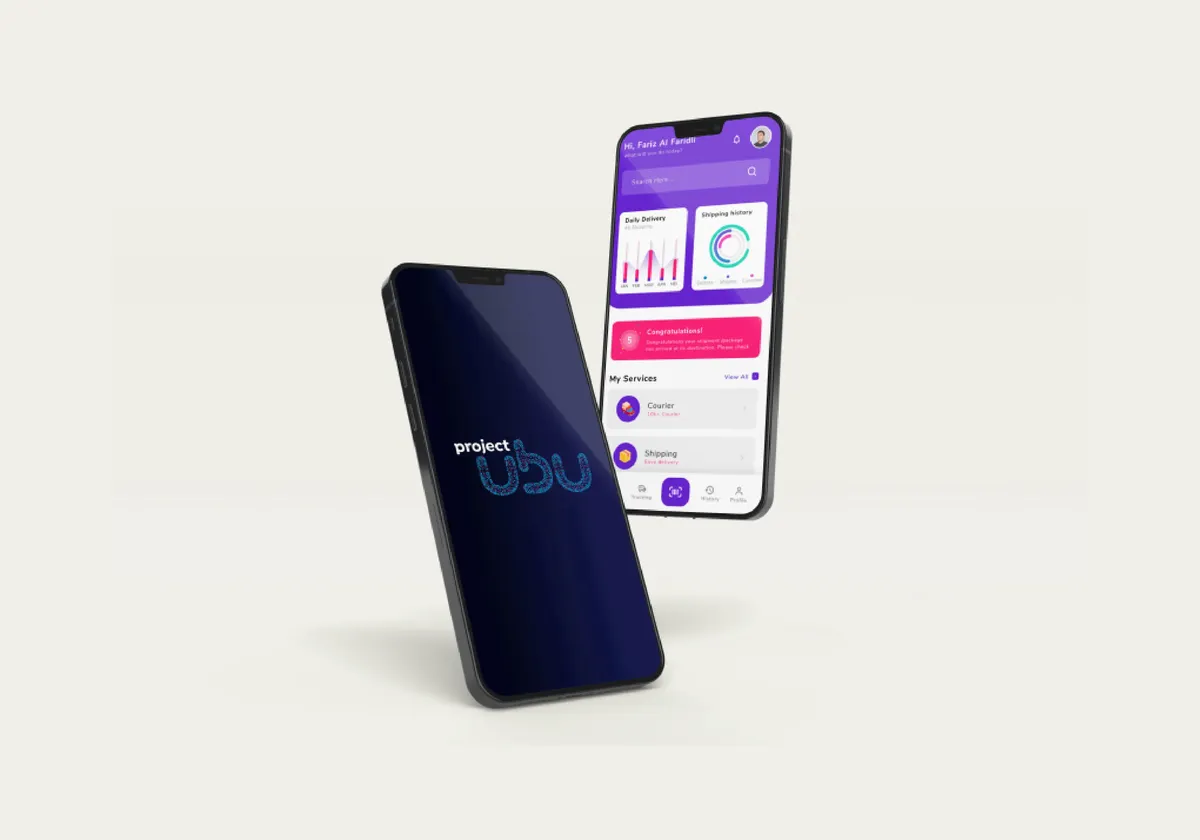
The apps people use: wallet sign-in, transaction signing, pending and failed transaction states, and indexed on-chain data through The Graph. Project UBU’s wallet app and PWA, built by Scrums.com, issued tokens to registered citizens every day and committed up to 700,000 transactions in its first year.
When it fitsYour users need a Web2-quality experience on top of on-chain logic.
Trade-offsA public chain can reorganise. The app treats a transaction as final only after enough block confirmations.
How the plan covers it
✓Wallet integration with MetaMask and WalletConnect
Contracts, protocols, integrations and audits. Managed together.
Every Delivery Plan · Core comes with the full blockchain team and the tooling around it: architecture, smart contract engineering, testing and audit preparation, integration and node infrastructure, run by one delivery owner.
Delivery managementOne accountable delivery owner.Milestones agreed before work begins.
01Architecture and chain choiceWhether a ledger fits the problem, permissioned or public, and what goes on-chain versus off-chain
02Smart contractsSolidity, Rust and Go chaincode on the OpenZeppelin baseline
03Testing and verificationUnit, integration, fork and fuzz tests, and formal verification of critical invariants
04Audit preparationAudit timelines in the schedule and findings fixed before mainnet
05Oracles and indexingChainlink for off-chain data and The Graph for queryable on-chain events
06Enterprise integrationEvent bridges to core banking, ERP and CRM, with reorg-safe confirmations
07Node infrastructureHosted or self-run nodes, with multi-region validators where uptime needs it
08Compliance controlsMiCA, securities transfer restrictions, KYC and the FATF Travel Rule, designed in
10Contract and code ownershipAll contracts, deployment scripts and application code are yours from day one.
100%
A mainnet deployment is not the finish line.
MonitoringContract events, node health and bridge activity watched in production.
Incident responseEmergency pause paths and runbooks ready before they are needed.
UpgradesProxy upgrades and migrations planned, tested and audited like the first release.
Quarterly reviewsPlatform reviews and roadmap updates every quarter, with knowledge transfer to your team.
Runs on the Scrums.com platform
Every Delivery Plan runs on the Enterprise AI Platform for software engineering.
Your team, its AI agents and your delivery data sit on one governed platform. That is what powers your delivery board, the code-review agents, and the talent bench behind your plan.
One blockchain hire covers one role. The plan covers the whole team.
A blockchain product needs contracts, backend integration, a frontend, testing and node infrastructure. Hiring covers them one role at a time. The Delivery Plan covers them in one monthly price.
Swipe to compare →
Compare
RecommendedScrums.com Delivery Plan · Core
In-house blockchain engineer
Traditional blockchain agency
Roles covered
✓Smart contracts, backend, frontend, QA and nodes
One role per hire
Depends on the agency bench
Time to start
✓48 hours to first code
A hiring cycle first
Proposal and contract cycle first
How you pay
✓Was $8,000£6,700R140,000now $4,500£3,750R79,000 / month, one plan price
Salary, benefits and recruiting fees
Project quotes and change requests
Who runs delivery
✓One accountable delivery owner
You manage the work
The agency project manager
Visibility
✓Every contract, test run and release on the Scrums.com Platform
Basis: the figure that the current Scrums.com custom software development page states against US and UK agencies. Blockchain work runs on the same plan. It is not a quote for your scope.
What you get
Why companies choose a managed team for blockchain development
01
An honest first question
If a conventional database with good access control solves the problem, we say so before the build starts.
02
Security planned in
Fuzzing, formal verification and the independent audit are in the schedule, not a gate before launch.
03
One monthly price
One plan price for contracts, integration and app work. Your scope sets the number of months.
04
Public or permissioned
Ethereum, Layer 2s, Solana, Hyperledger Fabric and Corda, chosen on throughput, privacy and regulation.
05
Built for regulated finance
Teams that have worked within payments and banking compliance, from national payment systems to digital investment apps.
06
Delivered since 2018
Scrums.com built Project UBU, a blockchain token platform and a 2018 AppsAfrica Blockchain Award finalist.
Customers
Blockchain and FinTech case studies
Teams are matched to your domain, built for tokens, payments, FinTech and regulated platforms.
Featured blockchain case study
Project UBU: a blockchain token economy in a mobile app and PWA
Challenge
Issue a free universal basic income token to registered citizens every day, and let them spend it with vetted vendors near them.
Platforms and technologies
React and React Native, GraphCool and Prisma, a Sequence blockchain service, hosted on AWS. Android app plus a PWA for iOS users.
Work delivered
The MVP mobile app and PWA, then maintenance and feature upgrades, with a team that grew to four senior and mid-level developers.
Result
2,100 downloads in two months of beta, over 19,000 UBU tokens in circulation and up to 700,000 transactions in the first year.
One Delivery Plan · Core covers your development priorities across services. Start with the discovery and the contracts, then queue the API, wallet, app and security work on the same backlog, or describe your own.
Lay the foundation for successful projects with structured workshops designed to align stakeholders, define goals, and create a clear product roadmap in as little as 1 week.
Automate invoices, payments, customers, journals, or reconciliation data between your systems and an accounting platform. Finish state: the books updating themselves for the defined flows.
Design and implement a versioned production REST API for a defined domain or product capability. Finish state: a documented, secured, versioned API serving real clients.
Connect an application to an ERP for defined master-data, order, inventory, finance, or fulfillment flows. Finish state: the defined flows exchanging data reliably, with the ERP respected as system of record.
Build one React Native codebase targeting iOS and Android for a defined production application. Ends with both apps live from a single codebase you own.
Core costs Was $8,000£6,700R140,000now $4,500£3,750R79,000/month for one active workstream. Your product’s scope determines the delivery schedule and total cost. You can use the same subscription for other development priorities.
Best for companies building smart contracts, DeFi protocols, tokenisation platforms or permissioned ledgers that must meet production and compliance standards.
Delivery Plan · Factory
One plan for your software backlog.
Now $4,500£3,750R79,000/ monthWas $8,000£6,700R140,000
✓Delivery owner. One accountable owner runs your smart contract, backend and app engineers.
✓One backlog across your development priorities. You set the order; requests are scoped and delivered one workstream at a time.
✓Visibility. Milestones agreed up front. Contracts, test runs and releases live on the Scrums.com Platform.
✓Ownership. Contracts, deployment scripts, code and data are yours from day one, with handover included.
Work is scoped and delivered within your plan’s capacity. Priorities can change; additional parallel workstreams require more capacity.
First-month benefits
14DAYS
First-delivery guaranteeThe team builds your first agreed deliverable within 14 days of scope and access being confirmed, or your first month is free.
$500 in AI infrastructure catalog creditsMONTH 1
Annual-plan benefits$10,000 in specialist services
Technical Assessment & Delivery RoadmapWe review your systems, rank your priorities and agree the first deliverable.
CI/CD & Quality Pipeline SetupYour pipelines, environments and quality checks, set up and handed over to you.
You buy monthly delivery capacity, not a fixed project price. Third-party security audits, gas fees, node hosting and other third-party services are billed separately. Full Delivery Plan coverage and terms →
Need more workstreams or have complex requirements? Talk to Sales →
Day 0Scope and access confirmedOnboarding starts at checkout. You confirm scope and share repos, chain accounts and CI.
Within 48 hoursCoding startsThe team starts work in your repositories.
Within 14 daysFirst deliverable builtFor example a tested core contract deployed to a testnet.
If it does not shipYour first month is freeYou do not pay for month one.
The first deliverable is agreed in writing before the clock starts. The clock starts when scope and access are confirmed. Applies to the first deliverable on a new plan.Read the full Delivery Plan terms →
FAQ
Blockchain development questions, answered
Still deciding? Talk to sales and get a scoped answer for your product.
Delivery Plan · Core costs Was $8,000£6,700R140,000now $4,500£3,750R79,000 a month, excluding VAT or sales tax. That buys one active workstream with a managed blockchain team. It is monthly delivery capacity, not a fixed price for a complete product, so your scope sets the number of months. Third-party audits, gas fees and node hosting are billed separately.
Yes. Delivery Plan · Core covers mobile, web, backend, AI, data and QA work as well as blockchain development. All of it sits in one prioritised backlog and is delivered within your plan’s capacity, one active workstream at a time. Priorities can change; additional parallel workstreams require more capacity.
Blockchain is appropriate when you need immutability that a single party can't override, decentralised consensus between parties who don't trust each other, or programmable settlement that executes without a trusted intermediary. If all parties can agree on a single trusted operator, a conventional database with a well-designed access control model is simpler and cheaper to build and operate. We tell you which applies before the build starts.
A production enterprise DLT network (a Hyperledger Fabric multi-party network with basic smart contract automation) typically takes 9 to 14 months. A DeFi protocol on Ethereum or an EVM-compatible chain takes 6 to 10 months, including the smart contract audit that must finish before mainnet. Asset tokenisation platforms take 12 to 18 months because of regulatory and custodial integration.
With unit, integration and fork tests, fuzz testing (Echidna, Foundry's built-in fuzzer), and formal verification of critical invariants (Certora Prover). For any production financial contract, an independent security audit by a specialist firm is non-negotiable. Audit timelines are planned into the schedule, not added as a last-minute gate before launch.
For regulated inter-institutional use cases (banking, supply chain, trade finance): Hyperledger Fabric or R3 Corda. For public DeFi or token issuance that must compose with the existing DeFi ecosystem: Ethereum or an EVM-compatible Layer 2. For high-throughput applications where Ethereum gas costs are prohibitive: Solana or Avalanche. Where a public chain is required but cost and throughput matter: Polygon, Arbitrum or Optimism.
Through an event bridge that translates between on-chain events and off-chain systems such as ERP, core banking and CRM. For Hyperledger Fabric, the Fabric SDK is the integration layer. For EVM chains, event listeners subscribe to contract events and trigger downstream updates. On public chains the bridge handles reorganisations: it does not treat a transaction as final until enough block confirmations have accumulated.
The clock starts when you confirm scope and give access to your repositories, chain accounts and CI. Within 48 hours the team starts coding. Within 14 days the team builds your first agreed deliverable, for example a tested core contract deployed to a testnet. If it does not, your first month is free.
Yes. If you want engineers inside your own team, hire Solidity, Rust and DLT specialists through Scrums.com on the blockchain developers page. The Delivery Plan is the managed option: one delivery owner runs the team, and you rank the backlog.
48 hours to first code means the team starts coding within 48 hours of the day scope and access are confirmed. 14 days means the team builds the deliverable named at kickoff within 14 days of that date, or your first month is free. “Thousands of companies” counts organisations that have bought engineering services from Scrums.com since 2012. The delivery timelines come from Scrums.com’s blockchain app development page. The Project UBU figures come from its published case study. 40-60% lower cost is the figure that the custom software development page states against US and UK agencies; it is not a quote for your scope.