LIVE33 pre-vetted blockchain specialists · Solidity · Rust · DeFi · DLT · median time-to-hire 21 daysavailable 22uptime 99.99%
Blockchain engineering

Hire Blockchain
developers

Pre-vetted Solidity, Rust and DLT engineers who know your chain, integrate with your tools and ship audited production contracts in 21 days, not six months.

No upfront fees 100% replacement guarantee
RestrictedToken.solsolidity 0.8.24 · agent live
1 function _update(address from, address to, uint256 value) internal override {
2 require(whitelist[to], "not KYC verified");
3 require(block.timestamp >= lockup[from], "locked");
4 super._update(from, to, value); // ERC-20 · OZ 5.x
5 emit TransferChecked(from, to, value);
6 }
// blockchain ci · agent telemetrypassing
●09:41:02forge testtest/RestrictedToken.t.sol72 passed · 2.3s
●09:41:02echidnainvariants50,000 runs · 0 broken
●09:41:02slither .static analysis0 high
01

6 Blockchain engineers in the current shortlist window

All Blockchain33SolidityRust / SolanaDeFiEnterprise DLTSecurity
22 available nowavg rating 9.4/10 · Blockchain onlyprofiles released on shortlist
02

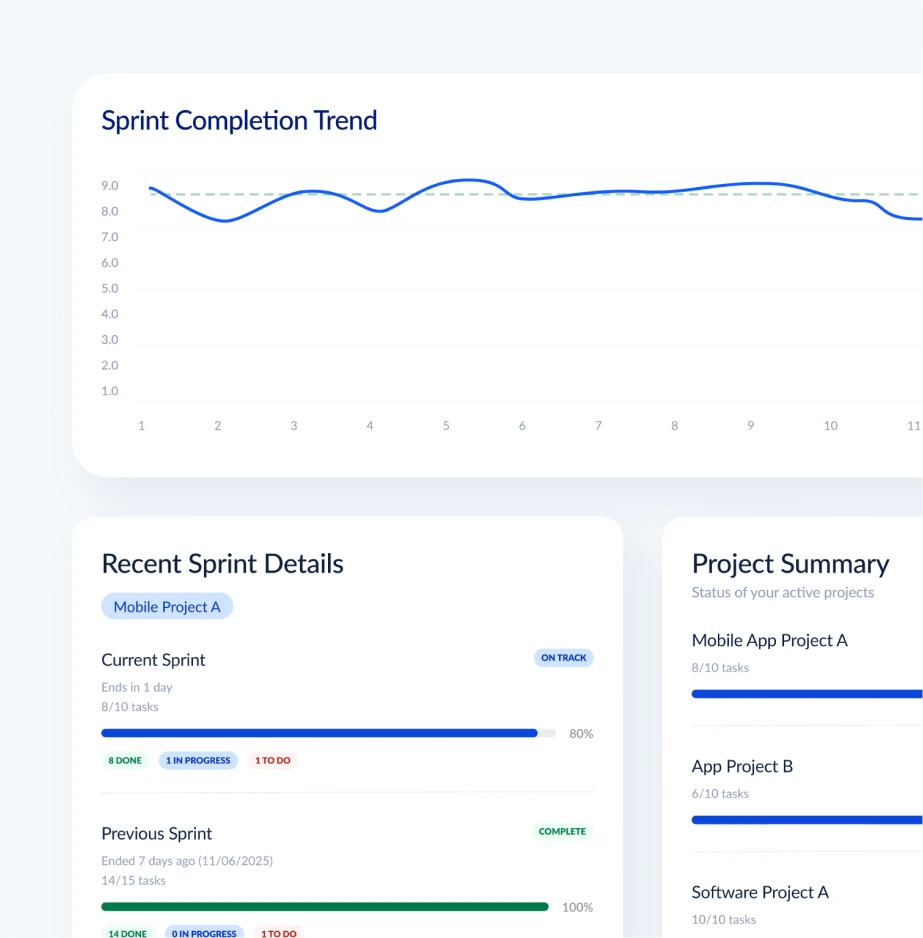
Manage your Blockchain hires in one dashboard

Review shortlists, track DORA metrics per engineer and scale your Blockchain capacity up or down each month, all from the Scrums.com workspace.

Per-engineer DORA metricsDeploy frequency, lead time and review throughput for every Blockchain hire.
Shortlist & review in-appCompare pre-vetted candidates, work samples and ratings side by side.
Scale monthlyAdd or reduce Blockchain capacity with simple monthly adjustments.
Pre-integrated toolingEngineers plug into your GitHub, Jira and CI from day one.
app.scrums.com / talent · blockchainScrums.com talent dashboard for Blockchain hires
Why hire Blockchain Developers through Scrums.com
21 days
Median time from requisition to a productive blockchain hire.
100%
Replacement guarantee if a match isn't right.
~50%
Typical saving versus a local senior blockchain hire.
9.4/10
Average rating across blockchain engagements.
04

The Blockchain hiring playbook

What Blockchain Developers Build, and When a Ledger Is the Right Tool

Blockchain development has moved from proof of concept into production infrastructure at regulated financial institutions, supply chain companies and government agencies. The engineering problem has changed with it: less about whether the technology works, and more about making it work at the performance, reliability and compliance standards that production requires.

The honest first question. A blockchain gives immutability, decentralised consensus and programmable settlement through smart contracts. If your use case needs one of those properties and a conventional database with good access control cannot deliver it, a ledger is worth the engineering overhead. If not, it is not. A good blockchain developer tells you which applies before the build starts.

Where it earns its complexity. Cross-institutional settlement where no single party should control the ledger, programmable financial instruments that must execute without a trusted intermediary, and supply chain provenance where independent parties each add data that must be tamper-evident.

Scrums.com places Solidity, Rust and DLT engineers into your team, or delivers the whole build as a managed workstream through blockchain development services on the Delivery Plan. For background reading, see our blockchain technology articles.

Essential Skills to Look For in a Blockchain Developer

Smart contract engineering. Solidity for EVM chains, Rust for Solana programmes and Go for Hyperledger Fabric chaincode. Hardhat or Foundry toolchains, OpenZeppelin as the audited baseline for ERC-20, ERC-721 and ERC-1400 tokens, and upgradeable proxy patterns with a clear view of their risk.

Security mindset. Checks-effects-interactions against reentrancy, access control, emergency pause paths, fuzzing with Echidna or the Foundry fuzzer, and formal verification with Certora for critical invariants. Strong candidates plan the independent audit into the schedule rather than treat it as a gate before launch.

Architecture judgement. Permissioned or public chain, what goes on-chain and what stays off-chain, and when a Layer 2 such as Arbitrum, Optimism or Polygon gives Ethereum security at the throughput and cost the product needs.

Integration. Chainlink oracles, The Graph indexers, ethers.js or web3.js frontends, and event bridges into enterprise systems that handle chain reorganisations safely.

Regulation. Working knowledge of MiCA in the EU, securities rules for tokenised assets, and the FATF Travel Rule for transfers between virtual asset service providers.

Blockchain Delivery at Scrums.com

Scrums.com built the mobile app and PWA for Project UBU, South Africa's first ICO and a 2018 finalist for the AppsAfrica Blockchain Award. Registered citizens received free UBU tokens every day and spent them with vetted vendors near them. In its first year the platform had over 19,000 UBU tokens in circulation and committed up to 700,000 transactions. Read the Project UBU case study.

Hire an individual engineer, a fractional specialist or a full pod. If you would rather hand over the whole build, blockchain development on the Delivery Plan gives you one managed team, one backlog and one monthly price.

05

What teams build with Blockchain engineers

01

Build Smart Contracts That Hold Real Value

Write Solidity or Rust contracts on the audited OpenZeppelin baseline, with unit, fork and fuzz tests, formal verification of critical invariants, and an independent audit planned into the schedule. A deployed bug is permanent, so security is designed in from the first commit.

02

Launch DeFi Protocols

Design AMM exchanges, overcollateralised lending with liquidation mechanics, yield aggregation and DAO governance on Ethereum, Arbitrum or Avalanche. Chainlink price feeds, gas optimisation and defences against flash-loan and price-manipulation attacks come as standard.

03

Tokenise Real-World Assets

Represent real estate, private credit, commodities or fund interests as ERC-20 or ERC-1400 security tokens, with transfer restrictions for accredited investors, a KYC whitelist, and custody records that match on-chain ownership.

04

Run Enterprise DLT Networks

Build permissioned Hyperledger Fabric or R3 Corda networks for inter-bank settlement, trade finance and syndicated lending: private channels, identity management, regulatory audit trails and ISO 20022 payment messaging.

05

Ship Wallet Apps and dApp Frontends

Give users a Web2-quality experience on top of on-chain logic: wallet sign-in with MetaMask or WalletConnect, transaction signing, pending and failed states, and on-chain data indexed through The Graph.

06

Connect a Chain to Your Enterprise Systems

Bridge contract events to ERP, core banking and CRM, with reorg-safe confirmation handling so a transaction counts as final only after enough block confirmations.

06

Teams that hire through Scrums.com

Our Scrums.com team members are high-impact, hard working, always available, and fun to have around. Thanks a million!

MM
CTO
MassMart · powered by Walmart

The Scrums.com team often pre-empted and identified solutions and enhancements to our project, going over and above to make it a success.

VW
CX Expert
Volkswagen

Over the past couple of years, their top-tier devs and QAs have plugged seamlessly into Payfast by Network, turbo-charging our sprints without a hitch.

PF
Engineering Manager
Payfast by Network
07

Hiring Blockchain engineers · FAQs

What blockchain work do your engineers cover?

Smart contracts in Solidity and Rust, DeFi protocols, asset tokenisation, enterprise DLT on Hyperledger Fabric and Corda, wallet and dApp frontends, and the integrations that connect a chain to your ERP or core banking. See the specializations above for who's available in each.

How are blockchain engineers vetted?

Each passes AI-assisted screening plus live assessments with blockchain-specific work samples: a smart contract security review, protocol design, gas optimisation and a cross-chain integration scenario. Only the top few percent reach the catalog.

How fast can a blockchain engineer start?

Most 'Available now' specialists start within days; others ramp in one to two weeks. Median time from requisition to a productive hire is 21 days.

Full-time, fractional or a whole pod?

All three. Hire an individual full-time or fractional, or deploy a ready-formed blockchain pod with an embedded lead and SLA-backed delivery. For a fully managed build, see blockchain development on the Delivery Plan.

What if the match isn't right?

Every engagement carries a 100% replacement guarantee: we replace a specialist at no extra cost if the fit isn't right, and you can cancel with notice at any time.

08

Other technologies

Keep exploring

Need Blockchain engineers? We'll shortlist in 48 hours.

Share your stack and goals on a 20-minute call and get a matched Blockchain shortlist with rates and availability. No commitment.

21 days. Median time from requisition to a productive blockchain hire.